
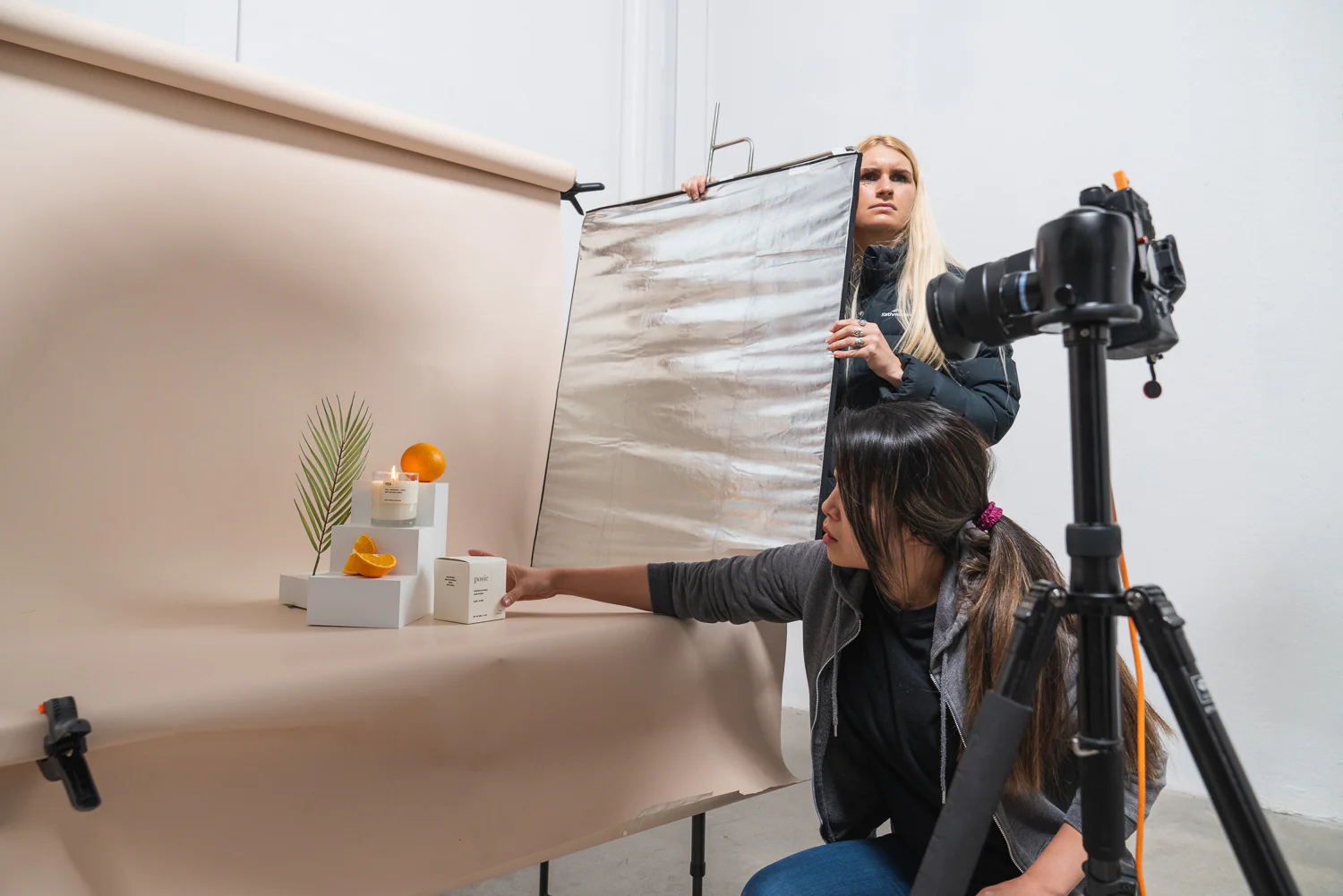
Strong product photography for small business does much more than make an item look attractive. It helps people understand what they are buying, how polished the brand feels, and whether the business looks trustworthy enough to order from. That decision often happens quickly. A customer may not consciously analyse every detail, but they still react to lighting, clarity, consistency, styling, and how professionally the product is presented.
This is why product photography matters so much for smaller brands. Large companies often already have visual systems, creative teams, and established trust. A small business usually has less room for weak first impressions. If the photos look rushed, dark, inconsistent, or confusing, the product can seem less valuable even when the product itself is excellent. On the other hand, clear and intentional imagery can make a smaller brand feel more credible, more established, and easier to buy from.
That does not mean every business needs a huge studio production. What it does mean is that the photography should be good enough to remove doubt. Customers want to see the product clearly, understand its details, and feel that the brand behind it knows what it is doing. For ecommerce, social media, websites, catalogues, launches, and campaign content, photography becomes part of the sales process whether a business treats it that way or not.
This guide explains how product photography for small business works, which images matter most, how to prepare products before a shoot, what makes a gallery feel consistent, and how to think about product visuals as part of long-term brand growth rather than a one-time task.
Why product photography affects trust so quickly
When people shop online, they cannot pick up the product, feel the materials, check the finish, or inspect small details in person. The photos have to do that work instead. They have to reduce uncertainty. If they fail to do that, the customer is left with questions, and unanswered questions usually slow down sales.
Trust is shaped by more than technical sharpness. Customers notice whether the lighting feels professional, whether the colors seem accurate, whether the product looks carefully handled, and whether the overall visual style suggests a real brand rather than an improvised listing. Even small inconsistencies can create hesitation. One product may look polished, another may look darker, another may be cropped awkwardly, and suddenly the whole range feels less reliable.
For small businesses, this is especially important because photography often carries brand credibility before reputation has fully caught up. A strong image set can help a business look more established than its size. Weak imagery can make a good business look less serious than it really is.
The core product shots most small businesses need
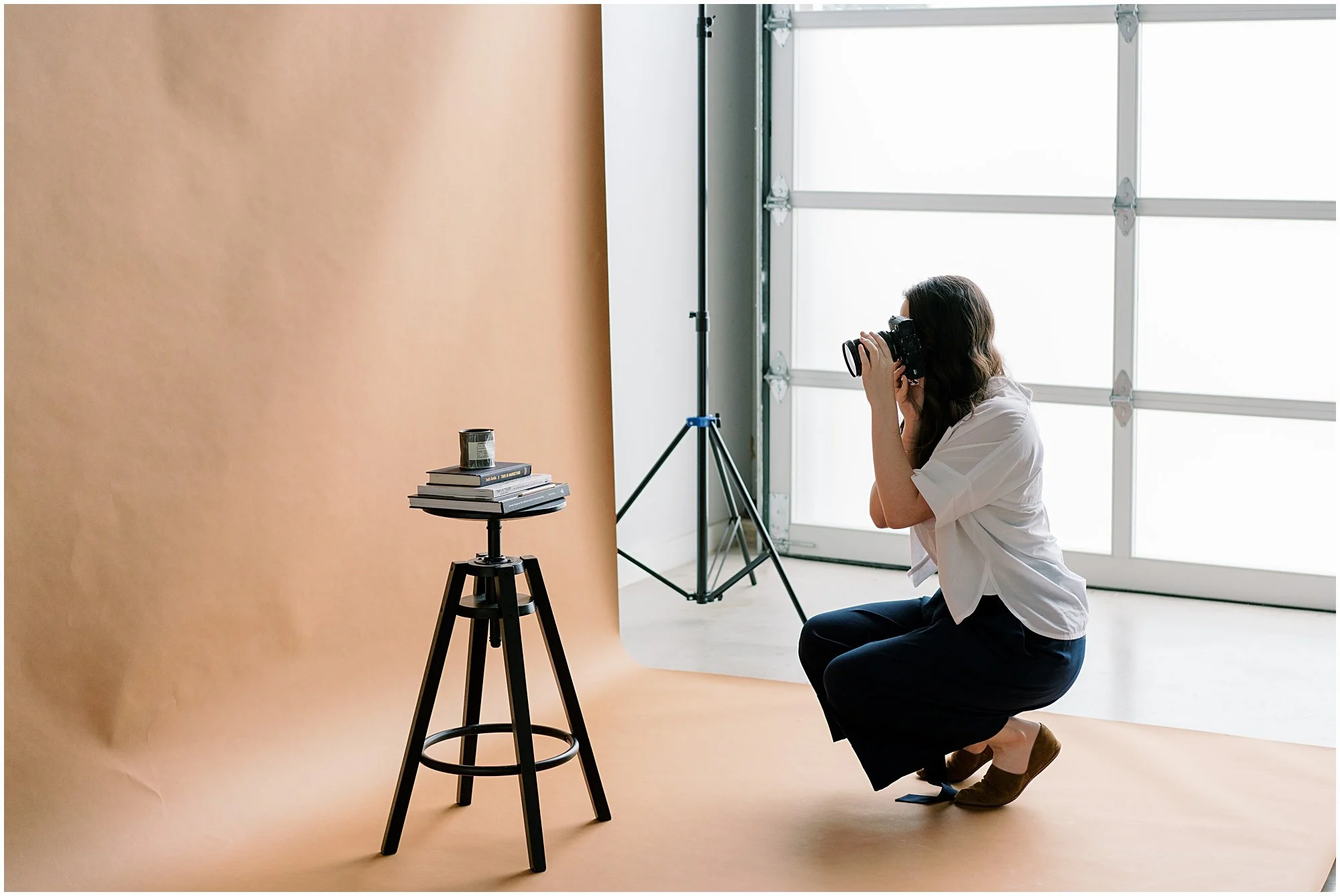
One of the most useful ways to approach product photography for small business is to stop thinking in terms of “a few product photos” and start thinking in terms of an image system. Different platforms and different customer questions require different types of images. If you only create one style of image, the content often runs out of usefulness quickly.
A practical product image set usually includes a mix of clean, informative, and brand-supporting photographs. Some are designed to answer straightforward shopping questions. Others are designed to create mood, lifestyle appeal, or stronger brand identity. Both matter, and the right balance depends on how the business sells.
Clean catalogue images
These are the foundation. Catalogue-style images show the product clearly and without distraction. They help customers understand shape, color, silhouette, and general design. For ecommerce in particular, this kind of image often does the most basic trust-building work because it tells the customer, “Here is exactly what this item is.”
Clean images are often photographed against simple backgrounds and with consistent lighting. That consistency matters. If customers are comparing several products in one collection, the visual presentation should help them compare easily instead of forcing them to mentally adjust to different shadows, scales, or color shifts.
Detail shots
Detail images help answer the questions customers often have before buying: What does the texture look like? How refined is the finish? What do the seams, closures, labels, edges, or surface materials actually look like? A strong detail shot can communicate quality much more effectively than a long product description.
This is especially important for products where material, craftsmanship, finish, or construction are part of the value. Customers may not know the right terms, but they can usually recognise whether a product looks carefully made once they see it up close.
In-use or lifestyle photos
Lifestyle imagery helps customers imagine the product in context. Instead of showing only what the item is, these images start showing what the item feels like in use. That shift can be powerful. It gives the product emotional relevance and helps connect it to a person, a space, a routine, or an identity.
For some brands, lifestyle photography is where the brand personality becomes much clearer. A candle brand, clothing line, ceramic label, stationery business, skincare range, or homeware company may all need this type of content to move beyond simple product display. It adds story, which is often what turns interest into desire.
Scale and packaging images
Customers often struggle to judge scale online. A product may look larger, smaller, thicker, or more substantial than it really is depending on how it is photographed. Scale images help reduce that confusion. Packaging shots are also valuable, especially when presentation is part of the customer experience or gifting appeal.
These images can be extremely practical. They reduce preventable questions, improve transparency, and help the customer feel more confident in what they are ordering. Confidence matters because uncertainty usually creates hesitation at checkout.
Styling, surfaces and backgrounds that support the product
Styling should support the product, not overpower it. That sounds obvious, but it is one of the easiest things to get wrong. Businesses sometimes add props, textures, or busy visual elements because they want the images to feel elevated, but too much styling can distract from the item that is supposed to be selling.
The right background depends on the brand and the type of product. A plain background can be perfect for clarity and consistency. A styled surface can work well when the business needs a warmer or more editorial feel. Natural materials, paper backdrops, soft fabric, stone, timber, or color-blocked sets can all work if they match the brand logic. The key word is logic. The style should feel connected to the product, not randomly decorative.
A good rule is this: if a customer remembers the props more than the product, the styling has probably gone too far. Strong product photography creates visual interest while still keeping the item as the clear focal point.
How to prepare inventory before the shoot
Preparation has a huge effect on how smooth the session feels and how polished the final images look. Many product shoots lose time not because the photography itself is difficult, but because the products arrive unprepared. Dust, fingerprints, creases, damaged packaging, missing labels, scratched surfaces, inconsistent stock, and last-minute styling decisions can all slow the session down and lower the quality of the final result.
It helps to treat preparation as part of the shoot rather than something separate from it. The cleaner and more organised the products are before the session starts, the more time can be spent actually creating useful imagery instead of solving preventable problems.
- Check every product closely for dust, marks, loose threads, dents, scratches, or packaging flaws.
- Prepare duplicates if possible so there is a backup if one item becomes difficult to shoot cleanly.
- Organise products by priority so the most important items are photographed first.
- Group any props, inserts, packaging, and accessories with the correct item in advance.
- Decide on key visual variations early if a product comes in different colors, sizes, or styles.
These steps are not glamorous, but they make the final images stronger. In product photography, the small flaws customers would never notice in person can become very obvious in a high-resolution image.
What makes product photos feel consistent across a whole range
Consistency is what turns product pictures into a visual system. Without it, a collection can start feeling patchy even if individual images are technically good. That patchiness makes the brand feel less established. Customers may not describe it that way, but they usually sense when a range looks professionally unified and when it does not.
Consistency usually comes from repeated decisions: similar lighting logic, background treatment, camera distance, color approach, crop style, scale reference, and editing tone. If one product is bright and airy, another is heavily shadowed, and another is cropped in a completely different way, the collection becomes harder to read as one brand. That matters both for ecommerce and for visual marketing generally.
This is also why product photography should be planned with the wider content system in mind. If the images need to work not only on product pages but also in launches, campaigns, and announcements, consistency helps them travel much more effectively across channels.
How to balance clarity with brand personality
Some product imagery is almost purely informative. Some is highly styled. Most small businesses need a balance of both. If every image is purely functional, the brand may feel flat. If every image is highly atmospheric, customers may struggle to understand the product clearly enough to buy. The strongest approach usually combines clarity with character.
This means deciding where each type of image belongs. Product pages may need clean, consistent clarity first. Social campaigns may need more mood. Homepage visuals may need broader storytelling. Email launches may benefit from a mix of straightforward product views and more editorial frames. Once you understand the role of each image type, the shoot becomes much more strategic.
Brand personality should not replace product accuracy. It should sit around it. Customers still want to know what the item looks like, what the finish is like, and whether it matches their expectations. Strong branding helps close the emotional gap, but trust still depends on clarity.
When a small business should refresh its product photography
Many small businesses hold onto old product images for too long because replacing them feels like a large project. That is understandable, but outdated imagery can quietly drag down the whole brand. If the photos no longer match the quality of the product, the current packaging, the new direction of the business, or the standard of the market, the content may be costing more than it saves.
It may be time to refresh your imagery if your product range has grown, your visual branding has improved, your older photos feel inconsistent, your ecommerce conversion is weak, or your business has moved into a more premium market position. It may also be time if your current photos make content creation harder rather than easier.
A refresh does not always mean photographing everything from scratch at once. Sometimes it means identifying the products and image types that will create the most immediate improvement and rebuilding from there in a more structured way.
How to choose the right photographer for product work

Not every photographer who creates attractive portraits or event images is automatically the right fit for product photography. Product work often requires a different kind of patience, detail-awareness, lighting approach, and consistency across a whole set. That is why choosing the right person matters.
Look for someone whose work shows control, clean execution, and an understanding of how products need to function across business platforms. It also helps if they understand the difference between ecommerce clarity and broader brand storytelling, because many small businesses need both from the same image library.
The right collaboration usually starts with the right questions. Before booking, it is worth thinking carefully about style, process, deliverables, and whether the photographer understands what your brand actually needs from the shoot.
How product photography supports long-term brand growth
The most valuable product photography is rarely the kind that is used once and forgotten. A strong image set keeps working. It supports product pages, category pages, launch graphics, paid ads, retailer decks, packaging inserts, lookbooks, press outreach, and social content over time. The better and more structured the image library is, the less often the business has to scramble for visuals later.
This matters especially for small businesses because every good asset needs to work harder. A strong product image can support trust, sales, perception, and marketing efficiency all at once. That is a high-value result from one type of content.
If the photography is approached strategically, it also helps a business look more mature. Even if the business is still growing, the visuals can create the sense that the brand already understands its market and takes itself seriously. That alone can change how customers respond.
FAQ about product photography for small business
Why is product photography important for small businesses?
Product photography for small business is important because it builds trust, explains the product clearly, improves perceived value, and supports sales across websites, ecommerce listings, campaigns, and social media. Strong images help reduce customer uncertainty and make the brand look more credible.
What kinds of product photos should a small business have?
Most small businesses benefit from a mix of clean catalogue images, detail shots, lifestyle or in-use photos, and scale or packaging images. Each type answers different customer questions and supports different marketing uses.
Do product photos need to be highly styled?
Not always. Some products benefit most from clean, simple images, while others need more mood and story. The best approach usually combines clarity with enough brand personality to make the visuals feel distinctive rather than generic.
How should I prepare products before a shoot?
Prepare products by checking for dust, marks, damage, creases, missing parts, and packaging issues. It also helps to organise products by priority, prepare styling elements early, and have duplicates where possible for smoother shooting.
When should a business update its product photography?
It may be time to update product photos if the current imagery feels outdated, inconsistent, lower in quality than the product itself, or out of step with the brand’s current positioning. Refreshing imagery is especially useful when a business grows, rebrands, or expands its range.